
Tag: gnu/linux
-
Tux super key
Thanks, Brooke! 🙂 -
Ubuntu 10.10 Looking Spiffy on our Acer Aspire One
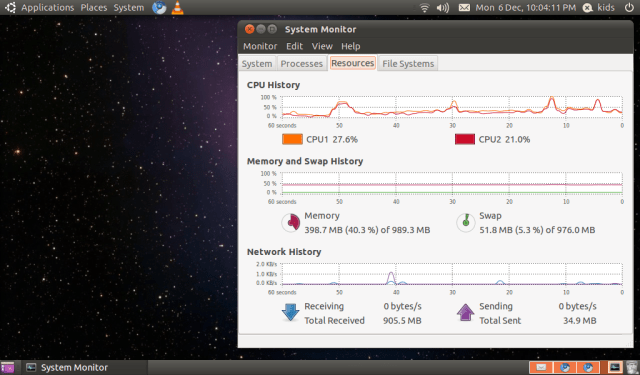
I’ve upgraded our household netbook to GNU/Linux Ubuntu Maverick Meerkat (10.10, from 9.04), and the latter is now the default boot-time option instead of Windows XP.Twenty of the drive’s 160GB are dedicated to Linux, as ext4. The rest is divided between the legacy NTFS partition for Windows, and another partition (~5GB) with Acer’s eRecovery tool, so I can reset the machine to factory defaults if ever needed. Since I was able to resize the partition dynamically right in the installer, I didn’t even need to move the files we had under Windows. The NTFS partition mounts in full read/write mode, so why bother for now?
Teagan (11) has been using it for a few days now, with Chromium/Chrome as his default browser and VLC as his default media player. The latter two being the apps he spends 99.9% of his time in.
For the record, I did try Ubuntu Netbook Edition, but I couldn’t get used to the dashboard-type UX, being a long-time Gnome user… The rest of the family would have probably been fine with it, but I figured I’d stick with the original for now. We can install the netbook remix interface on top later anyway.
-
Shell is King and ServerMattic Rules
While working on the systems team at Automattic, I became closely acquainted with our server deployment toolkit, an in-house yet GPL’d software named ServerMattic.
I find it to be not only elegant in its simplicity, but also brilliant when it come to learning curve and flexibility. Why? Simple: all in all, it’s just a set of clever shell scripts, backed by SVN, running more shell scripts. This means that anyone familiar with even the basics of Linux/Unix systems administration can wrap their brain around it in no time. On the other hand, it’s also powerful enough to maintain over a thousand servers with ease and sanity.
See http://code.trac.wordpress.org for more non-WordPress open source software by Automattic.
-
Making Ubuntu Server Work in Sun's VirtualBox
Here’s a quick fix if you’re interested in installing a VM running Ubuntu Server in Sun‘s OSS virtualization tool, VirtualBox.
After installing the 32bit version of Ubuntu Server 8.10 in VirtualBox 2.0.4 on my MacBook Pro (OSX), I was faced with the following error message when starting the VM, which I found also happens on other platforms:

From Wikipedia:
Physical Address Extension (PAE) refers to a feature of x86 and x86-64 processors that allows more than 4 gigabytes (GB) of physical memory to be used in 32-bit systems, given appropriate operating system support.
Fortunately, the fix was as easy as pie:
- Once VirtualBox is up and running, select your Ubuntu Server VM.
- Go to the “General” configuration screen and select the “Advanced” tab.
- Check the “Enable PAE/NX” option.
Here’s a screenshot:
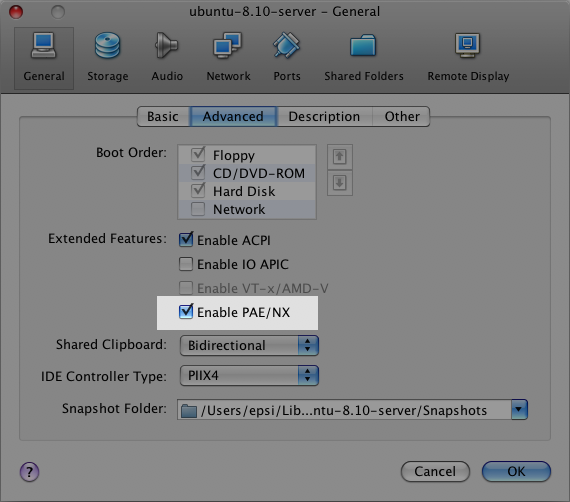
Try starting your VM again, and all should go as planned. It did for me.
-
YDL and the Versatile Side of the PS3
Although not yet available to the general public yet (<2weeks), Terra Soft has now released Yellow Dog Linux 6 to their YDL.net community.
One of the most important improvement in this release is the fact that the distribution is now built upon CentOS, with select Fedora 7 components, making it a much more robust enterprise solution. YDL6 has support for the PS3, Apple G4/G5 and IBM System p.
Don’t know why you would want to run Linux on your PS3? Just check Terra Soft’s projects/clients showcase to get an idea of how powerful the Cell-based console truly is. From driving a car to solving celestial mysteries, this sure is one versatile little black box.
-
Digg is Hiring LAMP Programmers
From Joe’s shout:
It’s 6PM on a Thursday night and I’m about ready to head over to the Open Web Awards presented by Mashables.com to celebrate Digg’s wins with a few of my fellow Diggers. The only downer is that we don’t have more Diggers to share the fruits of our labor with.
I went to San Francisco last June to meet with the Digg team, and I can certify that if you have the skills, already live in the area or are willing to move there, you MUST apply. It’s not just for show, this team really rocks!
Unfortunately (arguably), I can’t move to SF, family and all, so this one’s not for me.
-
OpenMoko Back on the Horizon
From “User-modifiable Linux phone upgraded“:
Open source phone company OpenMoko will ship a new version of its user-modifiable Linux-based mobile phone next year. The “Neo FreeRunner” resembles OpenMoko’s original Neo1973 model, but with WiFi, 3D accelerometers, and a faster processor, as well as a consumer market focus, according to the company.
OpenMoko (com, org) had kind of fallen off the map after not meeting their October 2007 deadline for launching the consumer version. Gladly, they now seem to be back on track with their newly announced FreeRunner, a Samsung 500MHz SoC-based device.
I did win an iPhone in the meantime, but I still love OpenMoko. Even though Android and Nokia are now arguably also riding on the Open tagline.
Via Digg.
Update: Ouch… It’s supposedly priced at US$600… Hopefully, they’ll get enough volume to lower prices with the new consumer market focus.
-
OpenMoko teaser video
See embedded video below for a teaser of the FIC Neo 1973 running OpenMoko.
I even like the soundtrack they chose, and they also have more OpenMoko related videos on their dedicated Youtube account. Must… Fight… Urge… And wait until October for the consumer version. Not enough time on my hands to involve myself as a developer unfortunately, but once again, it wouldn’t be the first time I say this and fall for it later on. 😉
-
Neo 1973 + OpenMoko: It's Out!
The first open mobile solution is out and available for purchase (developer preview).
Neo Base US$300
The Neo Base kit contains everything the mobile application developer needs to enjoy the benefits of the first freed phone, the Neo 1973.Neo Advanced US$450
The Neo Advanced Kit everything the mobile device hacker wants to get down and dirty with the first freed phone, the Neo 1973./happy-dance
